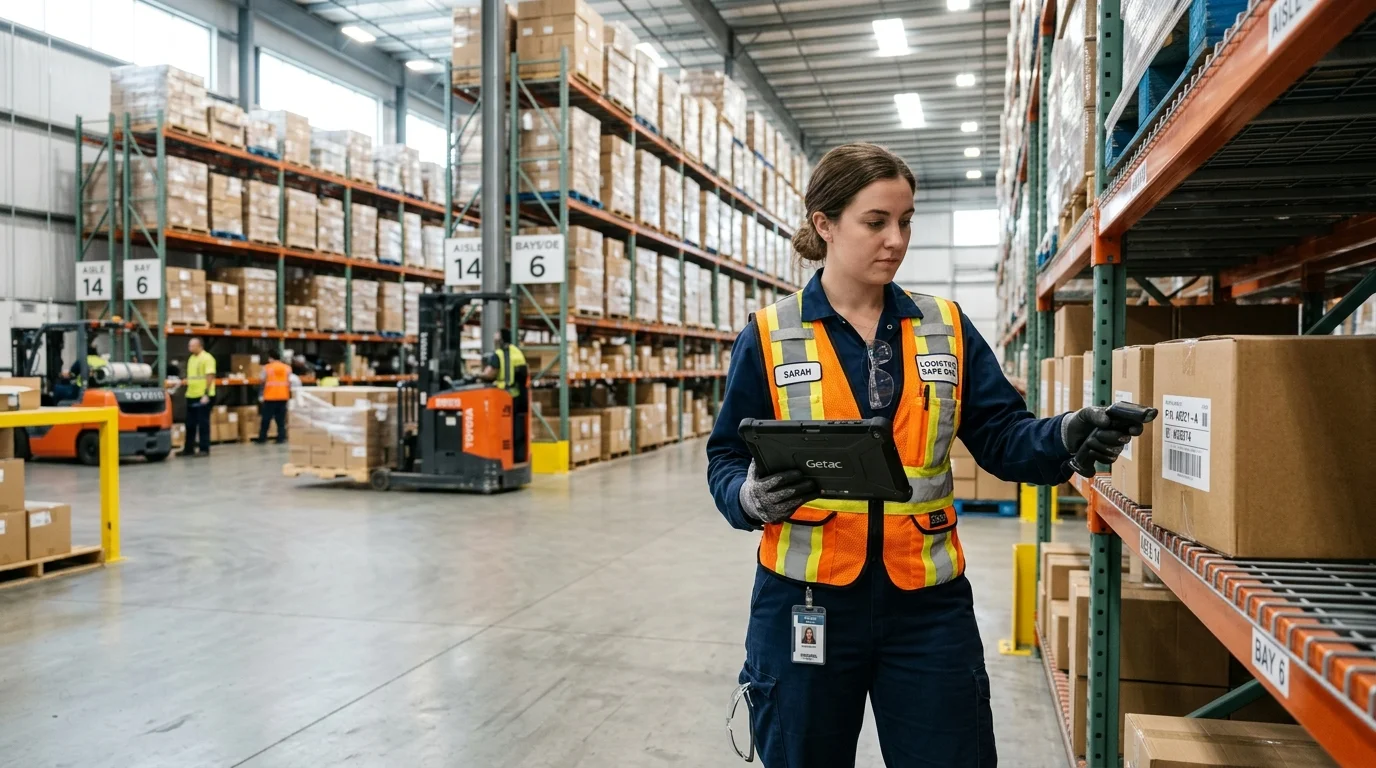
 Global logistics is a $12 trillion industry that runs on razor-thin margins. A 1% improvement in delivery efficiency for a mid-sized logistics company can translate to millions of dollars in annual savings. Yet most logistics operations still rely on manual dispatch, paper-based documentation, reactive maintenance, and gut-feel route planning.
The convergence of AI, IoT sensors, and cloud computing is changing this equation fundamentally. Companies that adopt smart logistics technology aren’t just reducing costs — they’re building operational capabilities that slower competitors can’t replicate.
At NSDBytes, we build logistics software that brings these capabilities to companies of all sizes. This guide covers where technology delivers the highest impact in modern supply chain operations.
The Five Pillars of Smart Logistics
Smart logistics isn’t a single technology — it’s an integrated approach across five operational dimensions.
Pillar 1: Intelligent Route Optimization
The problem: Manual route planning wastes fuel, time, and driver hours. Static routes don’t account for real-time traffic, weather, customer time windows, vehicle capacity constraints, or driver hours-of-service regulations.
The AI solution:
Modern route optimization engines consider hundreds of variables simultaneously:
- Traffic patterns: Historical and real-time traffic data predict travel times more accurately than static distance calculations
- Delivery windows: Customer-specified time slots constrain when deliveries can occur
- Vehicle capacity: Weight, volume, and special handling requirements determine which orders go on which vehicle
- Driver regulations: Hours-of-service rules, mandatory breaks, and shift schedules
- Priority ordering: Perishable goods, time-sensitive deliveries, and premium service tiers
- Dynamic re-routing: When a delivery fails, the vehicle breaks down, or a high-priority order arrives mid-route, the system re-optimizes remaining stops in real time
Business impact: AI-optimized routing typically reduces total miles driven by 15–25% and increases deliveries per vehicle per day by 20–30%. For a fleet of 50 vehicles, this translates to $300,000–$500,000 in annual fuel and labor savings.
Pillar 2: IoT-Powered Fleet and Asset Tracking
The hardware layer:
- GPS trackers on every vehicle provide location data at 10–30 second intervals
- OBD-II (On-Board Diagnostics) devices monitor engine health, fuel consumption, driving behavior, and maintenance indicators
- Temperature sensors in refrigerated units ensure cold chain compliance
- Door sensors detect loading/unloading events
- Dash cameras with AI analysis detect unsafe driving behavior and provide incident evidence
The software layer:
All this sensor data is only valuable when it flows into a unified platform that provides:
- Real-time fleet visibility: Every vehicle’s location, status, and next stop on a single map
- Automated alerts: Threshold-based notifications for temperature excursions, unauthorized stops, excessive idling, or speeding
- Customer-facing tracking: Share delivery ETAs with customers via SMS/email links
- Historical analytics: Patterns in route performance, driver behavior, and asset utilization over time
Integration with existing systems: Fleet tracking data should flow into your TMS (Transportation Management System), WMS (Warehouse Management System), and ERP for unified operational visibility. At NSDBytes, we build integration layers that connect IoT data streams with existing business systems through APIs and event-driven architectures.
Pillar 3: Warehouse Intelligence
The warehouse is where digital transformation delivers some of the most dramatic efficiency gains.
Inventory management:
- Real-time stock visibility across all warehouse locations, including in-transit inventory
- Demand forecasting using ML models that analyze historical sales, seasonal patterns, promotions, and market trends
- Automated reorder triggers based on predicted demand rather than static reorder points
- Slotting optimization that places high-velocity items in easily accessible locations, reducing pick times
Order fulfillment optimization:
- Pick path optimization that sequences picks to minimize warehouse travel distance
- Batch picking for multi-order efficiency when items overlap
- Wave planning that groups orders for efficient processing
- Quality control automation using computer vision to detect damaged items, incorrect picks, or packaging issues
Dock management:
- Appointment scheduling for inbound and outbound trucks to minimize dock congestion
- Automated check-in via mobile app or kiosk when drivers arrive
- Real-time dock status visibility for warehouse managers and drivers
Pillar 4: Predictive Analytics and Demand Planning
The shift from reactive to predictive:
Traditional logistics operates reactively — you wait for a vehicle to break down, then fix it. You wait for inventory to run out, then reorder. You wait for capacity constraints, then scramble.
AI-powered predictive analytics flips this model:
- Predictive maintenance: ML models analyze engine telemetry data to predict component failures 2–4 weeks before they occur. This reduces unplanned downtime by 35–50% and extends vehicle lifespan.
- Demand forecasting: Instead of ordering based on what happened last month, forecasting models incorporate economic indicators, weather patterns, competitive activity, and social media trends to predict what will happen next month.
- Capacity planning: Predict when you’ll need additional vehicles, temporary warehouse space, or extra labor based on order pipeline and seasonal patterns.
- Risk assessment: Identify supply chain disruptions before they impact operations — port congestion, supplier delays, weather events, and regulatory changes.
Pillar 5: Last-Mile Delivery Innovation
Last-mile delivery — the final leg from distribution center to customer — accounts for 53% of total shipping costs. It’s also where customer experience is won or lost.
Technology solutions for last-mile:
- Dynamic delivery windows: Instead of offering broad 4-hour windows, AI predicts delivery times within 30-minute accuracy and communicates real-time ETAs
- Proof of delivery: Photo capture, digital signature, GPS-stamped delivery confirmation
- Delivery attempt optimization: Predict when customers are likely to be home based on historical delivery success patterns
- Returns integration: Use the same logistics network for reverse logistics, optimizing return pickups alongside forward deliveries
- Crowdsourced delivery: Integrate gig-economy drivers for overflow capacity during peak periods
Technology Architecture for Smart Logistics
Building a modern logistics platform requires careful technology choices:
Data ingestion layer:
- Apache Kafka or AWS Kinesis for real-time IoT data streams
- MQTT protocol for lightweight IoT device communication
- REST APIs for system-to-system integration
Processing layer:
- Real-time processing: Apache Flink or Spark Streaming for continuous IoT data analysis
- Batch processing: Scheduled analytics jobs for reporting and model training
- ML pipeline: MLflow or SageMaker for training, versioning, and deploying predictive models
Application layer:
- Web dashboard for operations managers and dispatchers
- Mobile app for drivers (navigation, proof of delivery, vehicle inspection)
- Customer portal for shipment tracking and communication
- API gateway for partner and customer integrations
Infrastructure:
- Cloud-native on AWS or GCP for elastic scaling during peak periods
- Edge computing for real-time processing on vehicles (offline-capable)
- Time-series databases (InfluxDB, TimescaleDB) for IoT telemetry storage
ROI Framework for Logistics Technology
| Investment Area | Typical Cost | Expected Savings | Payback Period |
|---|---|---|---|
| Route optimization | $50K–$100K | 15–25% fuel reduction | 4–8 months |
| Fleet tracking | $30K–$60K + $15/vehicle/month | 10–20% idle time reduction | 6–12 months |
| Warehouse management | $80K–$150K | 20–30% pick efficiency gain | 8–14 months |
| Predictive maintenance | $40K–$80K | 35–50% unplanned downtime reduction | 6–10 months |
| Customer tracking portal | $25K–$50K | 40% reduction in “where’s my order?” calls | 3–6 months |
Frequently Asked Questions
How do I start a logistics digital transformation? Start with the highest-pain-point area. For most companies, that’s either route optimization (immediate fuel savings) or fleet tracking (visibility and accountability). These deliver fast ROI and generate data that enables more advanced capabilities later.
Can small logistics companies afford this technology? Yes. Cloud-based solutions eliminate large upfront infrastructure costs. IoT hardware has dropped dramatically in price. A 20-vehicle fleet can implement tracking and route optimization for under $50,000 — and save more than that annually in fuel and labor.
How do we handle drivers who resist technology adoption? Change management is critical. We recommend involving drivers in the design process, demonstrating how the technology makes their job easier (not harder), providing comprehensive training, and celebrating early wins. Gamification features (fuel efficiency leaderboards, safety scores) can turn skeptics into advocates.
What about data security for shipment and customer data? All logistics platforms we build include encryption at rest and in transit, role-based access controls, audit logging, and compliance with relevant regulations (GDPR for European operations, CCPA for California, and industry-specific requirements for pharmaceutical or defense logistics).
How does AI handle exceptions and edge cases? AI handles the 80% of decisions that follow patterns — optimal routes, predictive maintenance alerts, demand forecasts. The 20% of decisions that require human judgment (customer escalations, unusual shipments, force majeure events) are flagged for human review with AI-generated recommendations.
Build Your Smart Logistics Platform with NSDBytes
At NSDBytes, we combine AI development expertise with deep understanding of logistics operations to build platforms that deliver measurable operational improvements.
From route optimization to warehouse intelligence to customer tracking portals, we build custom software that transforms logistics operations from cost centers into competitive advantages.
Discuss your logistics technology needs →
Related Articles
Frequently Asked Questions

Written by the NSDBytes Team
We are passionate about software development, AI integration, and helping businesses achieve operational excellence through modern technology.
Need something like this built?
We’ve helped 200+ companies build and scale production-grade software.