Consumer iPhone apps
Sign-in, subscriptions, notifications and Apple Pay, built in Swift and SwiftUI.

iOS app development
iPhone and iPad apps written in Swift, built to Apple’s review guidelines and taken through App Store submission to release.
01 / What we build
Sign-in, subscriptions, notifications and Apple Pay, built in Swift and SwiftUI.
Larger-screen tools for front desks, clinics and shop floors, including kiosk use.
Widgets, Apple Watch companions and Sign in with Apple, where they earn their place.
Objective-C to Swift migration, crash fixing and updates for each new iOS release.
02 / How it connects
Apple reviews every release against its guidelines. A rejection on a first submission is common, so the plan includes time to respond.
You need an Apple Developer account in your company’s name. We build under it, so the app is yours from the first day.
Apple ships a major iOS version each autumn. Budget a short test and fix cycle around it.
03 / Proof
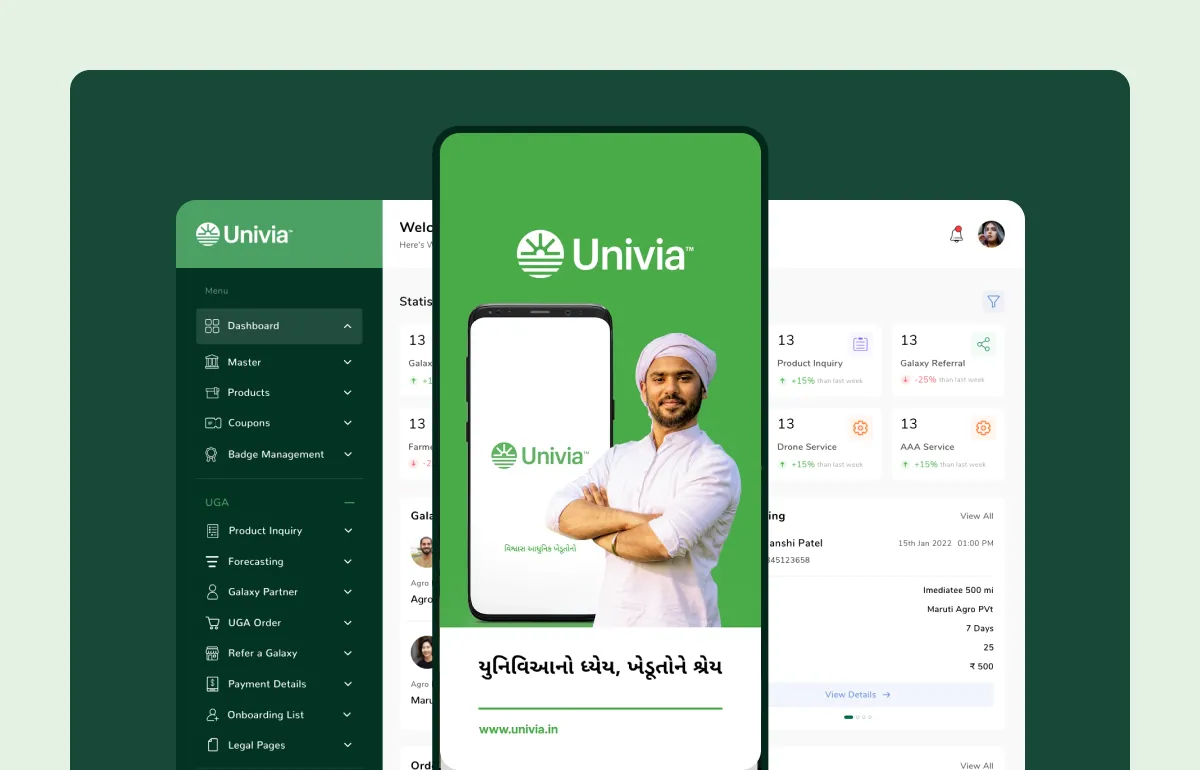
Client delivery / Agritech
Three connected products for an agricultural supply chain, with native iOS and Android apps and a staff control panel. Built in six months.
Read the UNIVIA case studyAlso in iOS: Education discovery platformBolt (no longer published)
Further reading

Mobile app development costs in 2026, broken down feature by feature — MVP to enterprise, native vs cross-platform, plus ongoing costs budgets often miss.
Read insight
Master Clean Architecture and MVVM patterns for iOS development. Build scalable, testable, and maintainable Swift applications.
Read insightA little clarity
We agree what the first release must do, design to Apple’s interface guidelines, then build in Swift in increments you can try through TestFlight. Launch covers the App Store listing, privacy details and App Review. Handover includes the code and accounts, and bugs are fixed free for 30 days.
Native Swift is our choice when the app depends on Apple features or the audience is mostly on iPhone. If Android is needed too on one budget, a shared codebase such as Flutter usually costs less, and we say so.
You own the code, designs and documentation made for you once the final invoice is paid. The app is built and published under your own Apple Developer account, so the listing, certificates and customer relationship are yours from the first day.
A small fixed first release, then decide. We agree the few journeys that prove the idea and price those; first releases start from $5,000. Once real users have the app, the next step is clearer. For ongoing change, a dedicated developer starts from $4,000 a month.
For an iOS app, growth means a codebase that can take new features and a back end that can take more users. We keep interface, logic and data layers separate, cover the important logic with tests, and design the API so it can change without forcing an app update.
Start wherever you are
Tell us who it is for and what it must do on day one. We will say whether native iOS is the right call before we quote.