Customer apps
Sign-in, payments, notifications and account journeys, published from your own Play Console account.

Android app development
Native Android apps in Kotlin, tested across the screen sizes and OS versions your users carry, and taken through Google Play review to release.
01 / What we build
Sign-in, payments, notifications and account journeys, published from your own Play Console account.
Tools for people working away from a desk, designed to keep working when the signal drops.
Bluetooth, NFC, scanners, printers and kiosks, where native access matters most.
Java to Kotlin migration, crash fixing and catching up with Google Play target API rules.
02 / How it connects
Android runs on thousands of device models. We agree a minimum OS version and a list of test devices before building.
Google reviews new apps and updates. Allow days, not hours, in the launch plan, and longer for a new developer account.
Google raises the required target API level every year. An app needs a small maintenance budget to stay listed.
03 / Proof
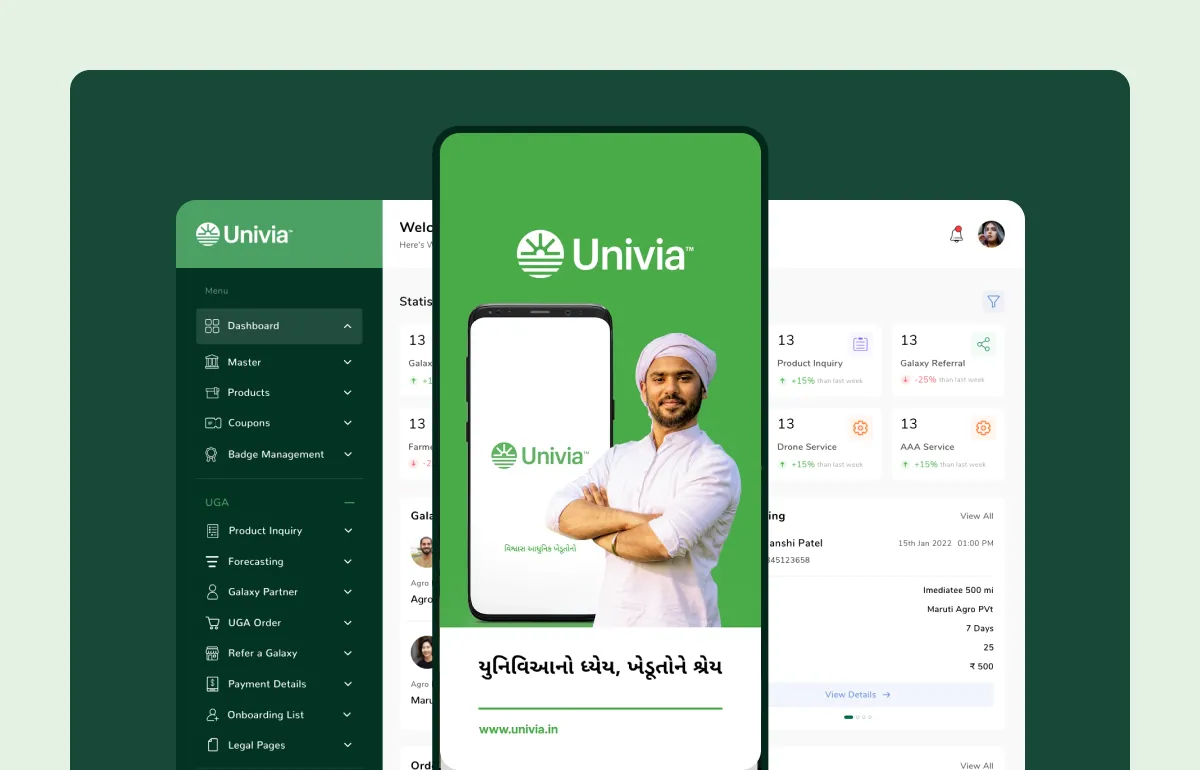
Client delivery / Agritech
Three connected products for an agricultural supply chain, with native Android and iOS apps and a staff control panel. Built in six months.
Read the UNIVIA case studyAlso in Android: Education discovery platformDog Life 3D, from our Peanut Butter Games studio
Further reading

Mobile app development costs in 2026, broken down feature by feature — MVP to enterprise, native vs cross-platform, plus ongoing costs budgets often miss.
Read insight
Why lightweight web guest portals outperform native hotel apps for digital check-in, and what that means for guest adoption.
Read insightA little clarity
We agree what the first release must do, then design the screens, build in Kotlin and test on a set of real devices, in increments you can review. Launch means Play Console setup, the store listing, Google’s review and a staged rollout. Handover covers the code, signing key and accounts, and bugs are fixed free for 30 days.
Native Android in Kotlin is our choice when the app leans on device features or only needs Android. If you need iOS as well on one budget, we usually suggest Flutter. If a web page would do the job, we say that instead.
You own the code, designs and documentation made for you once the final invoice is paid. The app is published from a Google Play Console account in your company’s name, and the upload signing key is handed over, so no future release depends on us.
Fix a small first release, not the whole product. We agree the few journeys that prove the idea and price those; first releases start from $5,000. How people use it decides the next step. A dedicated developer, from $4,000 a month, suits a scope that will keep changing.
On Android, growth is mostly about the range of devices and the back end behind the app. We keep the app’s layers separate so features can be added without rewrites, cache and sync data so weak networks do not break it, and design the API to grow independently of the app.
Start wherever you are
Tell us who will use it and on which devices. We will say whether native Android is the right call before we quote.