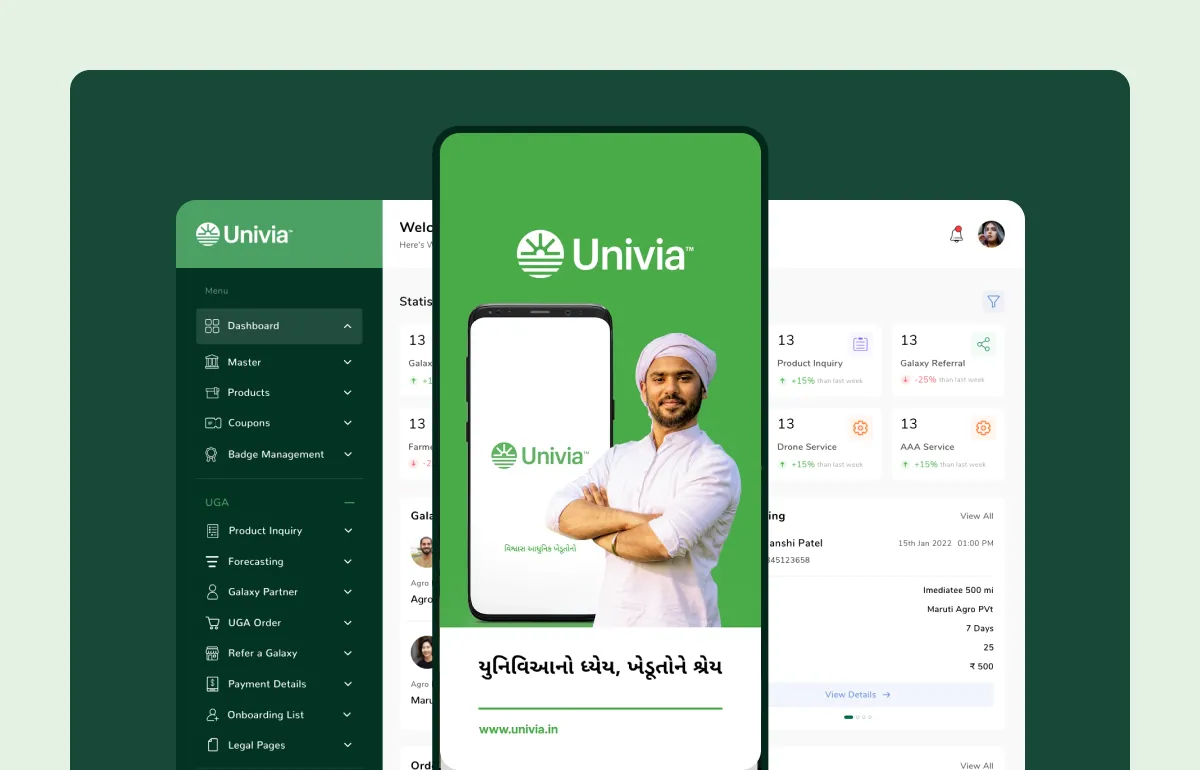
Supply-chain platform
Connected roles without one oversized interface.
Mobile and web experiences give each participant the work and context they need while remaining part of one product.
Review the UNIVIA case study
Logistics product development
Warehouse, fleet, delivery and partner workflows designed around real events, field conditions and the systems already in motion.

01 / Product evidence
UNIVIA connects mobile participation, operational workflows and administration for different roles in the same network.
Supply-chain platform
Mobile and web experiences give each participant the work and context they need while remaining part of one product.
Review the UNIVIA case study02 / Operating scope
Warehouses, drivers, customers, partners and existing platforms need different actions and different levels of visibility.
Turn demand into explicit work with ownership, priority, constraints and a visible next state.
Support receiving, put-away, picking, packing and inventory exceptions at the point of work.
Connect plans, drivers, vehicles, proof and changes without assuming uninterrupted connectivity.
Share the right status and documents across organisations without exposing the entire operating system.
A little clarity
Potentially. Discovery should confirm available interfaces, ownership, event definitions, rate limits and failure behaviour before the integration scope is committed.
They can be designed for intermittent connectivity, but the required offline actions, conflict rules and security constraints must be explicit for each workflow.
Start by defining the operational decision the location or status supports, then choose the event source, frequency, permissions, retention and acceptable delay. More frequent data is not automatically more useful.
Yes. A focused layer can connect to systems that still work. The boundary should be designed around ownership and failure recovery so the new product does not become another fragile bridge.
Start wherever you are
We’ll help map the events, users and systems before defining the first useful release.