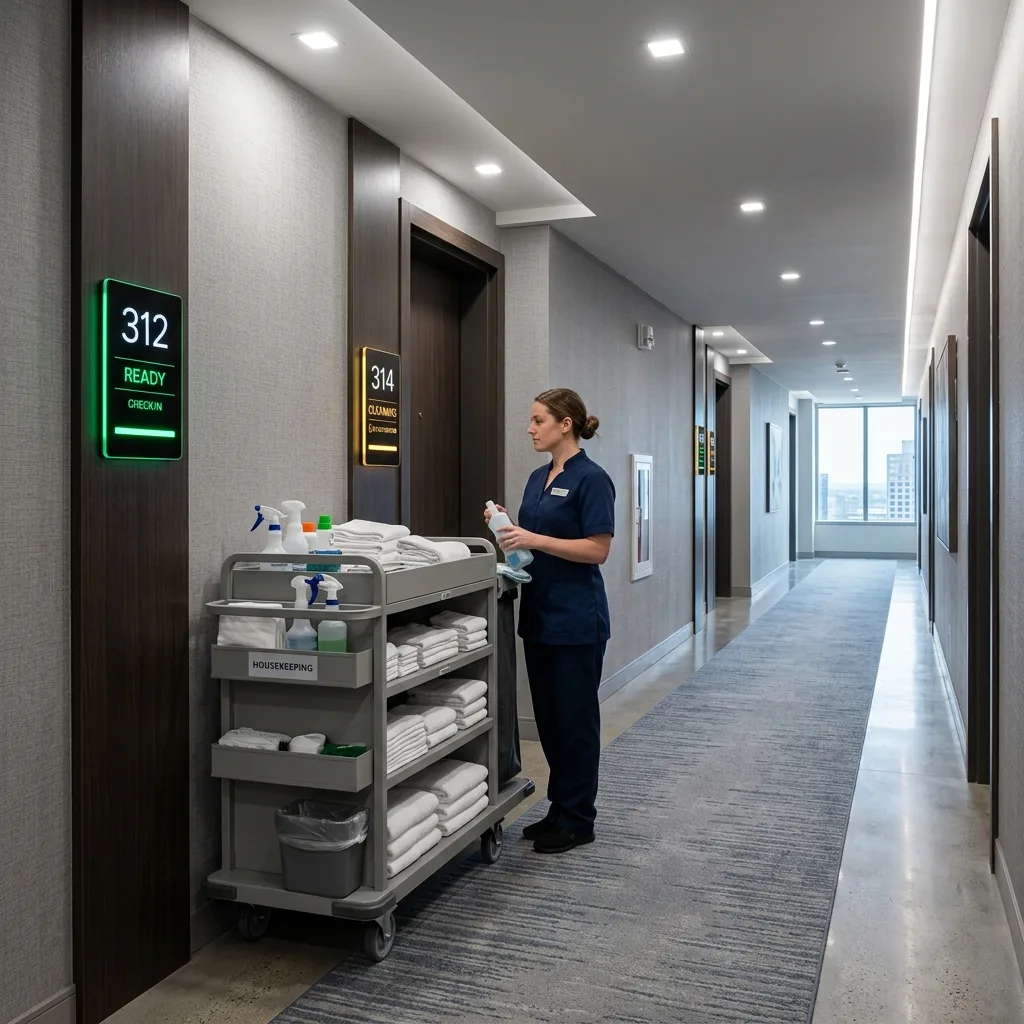
While much of the innovation in hospitality technology focuses on the guest-facing experience—like the automated check-in loops we’ve engineered—the back-of-house operations are often left running on outdated, manual processes. Paper clipboards, static morning printouts, and radio chatter remain the standard for many housekeeping and maintenance teams.
To truly run a frictionless hotel, operations must be as intelligent and dynamic as the pricing engines driving revenue. This is where occupancy-driven operations and smart plugins come into play.
The Inefficiency of Static Lists
Traditionally, housekeeping supervisors print a list of room assignments in the morning. This static list doesn’t account for early check-outs, unexpected VIP arrivals, or guests who opt for late departures. The result? Housekeepers clean rooms that won’t be occupied until late evening, while guests waiting in the lobby are delayed because their assigned room is at the bottom of the list.
Dynamic Prioritization via Smart Plugins
At NSDBytes, our hospitality product development team builds custom operational plugins that connect directly to a property’s Guest Management System (GMS) or PMS.
By utilizing an occupancy-driven model, these smart plugins drastically cut room turn times. Here’s how it works:
- Real-Time Data Ingestion: The plugin continuously monitors the GMS for live check-in statuses, early arrival requests, and check-outs.
- Algorithmic Prioritization: Instead of a static list, housekeepers receive a dynamic, mobile-friendly queue. If a guest arrives at the front desk (or completes digital web check-in en route), the system instantly pushes their assigned room to the top of the nearest housekeeper’s queue.
- Smart Status Indicators: Digital room status panels update in real-time, displaying green for “ready,” amber for “cleaning,” and red for “occupied/do not disturb,” providing instant visual cues for staff.
Integrating Maintenance for True Efficiency
This dynamic approach extends to maintenance. If a housekeeper reports a broken fixture via the plugin, a high-priority ticket is instantly routed to the maintenance team’s mobile devices. The room is automatically flagged in the GMS, preventing front-desk staff or automated allocation algorithms from assigning it to a guest until the repair is verified.
The Bottom Line
Occupancy-driven operations aren’t just about making life easier for staff; they directly impact the guest experience and the hotel’s bottom line. By prioritizing rooms based on real-time demand, hotels can nearly eliminate lobby wait times, reduce operational friction, and maximize resource efficiency.
Looking to streamline your back-of-house operations? Contact our development team to discuss custom plugins for your property.
Related Articles
Frequently Asked Questions

Written by the NSDBytes Team
We are passionate about software development, AI integration, and helping businesses achieve operational excellence through modern technology.
Need something like this built?
We build and maintain our own hospitality products like GMS. Let us build yours.