Search NSDBytes

Find the right place to start.

Popular starting points

Start typing or choose a suggestion.

Search across services, products, case studies and insights.Can’t find it? Tell us what you need

The 2026 Guest Journey: Engineering an End-to-End Automated Check-In Loop

Step-by-step walkthrough of the ideal modern guest experience, from direct booking and automated check-in to mobile keys and seamless checkout.

Modern Guest Journey

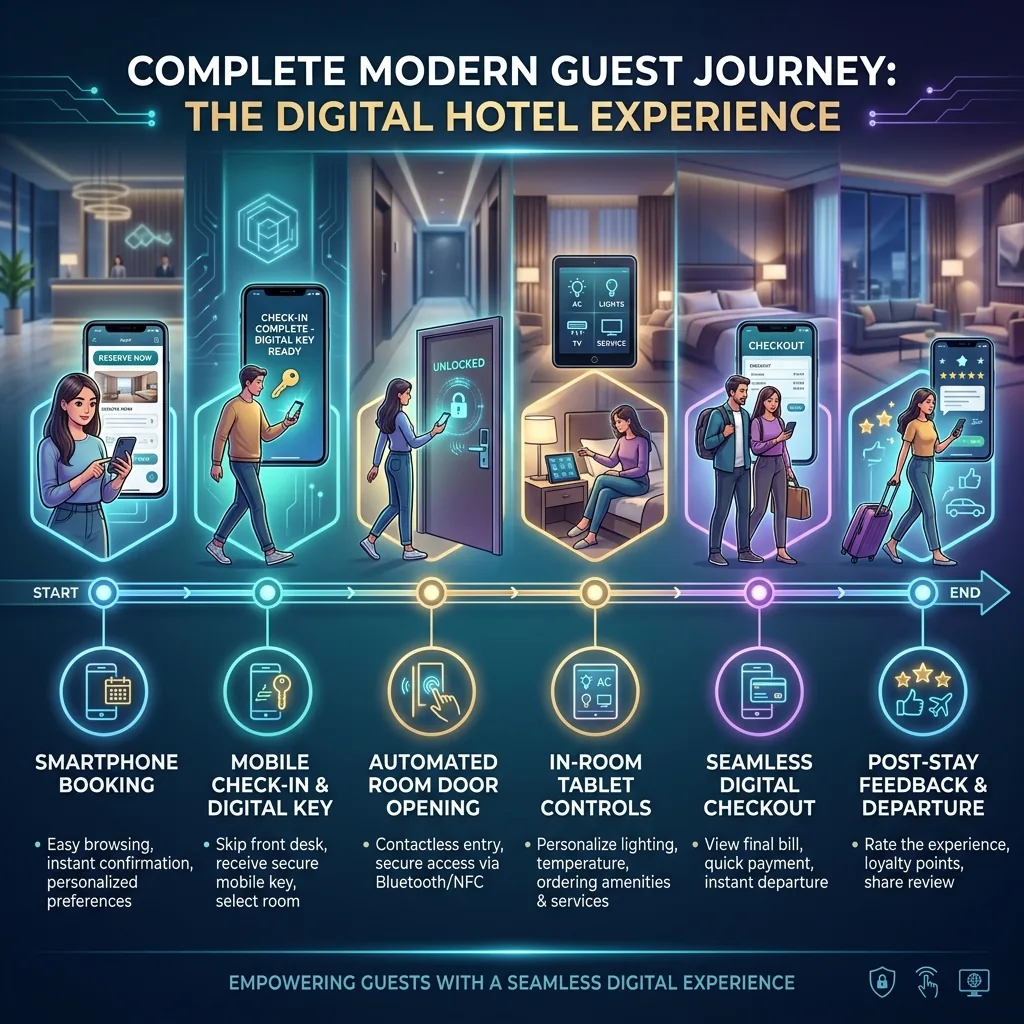
The modern traveler evaluates a hotel not just by the quality of the linens, but by the friction of the digital experience. In 2026, forcing a guest to stand in a slow-moving line to hand over a physical credit card is a failure of hospitality.

At NSDBytes, we specialize in building scalable architectures for the modern traveler. Drawing from our recent success in developing a highly accelerated Guest Management System (GMS)—which successfully reduced front desk queue times by an astounding 80%—here is a walkthrough of the ideal, end-to-end automated check-in loop.

Phase 1: The Direct Booking

The journey begins before the guest ever arrives. To maximize margins, hotels must incentivize guests to bypass OTAs. As detailed in our guide on reclaiming the top spot in hotel search, the best incentive is an exclusive digital experience.

When a guest books directly through the hotel’s custom-built website, they immediately enter the automated loop. The booking data is instantly synced into the core system, avoiding manual data entry errors.

Phase 2: Pre-Arrival Digital Web Check-in

24 to 48 hours before arrival, the guest receives a secure, mobile-first onboarding link. This interface, built for cross-platform scalability (often using frameworks like Flutter), feels premium and highly responsive.

Through this secure portal, the guest can:

  • Upload their government ID.
  • Complete payment authorization securely.
  • Request upgrades or note special preferences.

Phase 3: Auto Room Allocation & Readiness

Behind the scenes, the GMS goes to work. Smart algorithms automatically assign rooms based on the guest’s preferences and VIP status.

Crucially, this system communicates in real-time with the back-of-house. As explored in our post on occupancy-driven housekeeping, the assigned room is dynamically prioritized in the cleaning queue. Once the housekeeper marks the room as “ready” via their smart plugin, the loop proceeds to the final step.

Phase 4: Mobile Keys & Lobby Bypass

With the ID verified, payment secured, and the room clean, the GMS triggers the final automation. The guest receives a notification containing their room number and a secure digital key (or automated TTLock/gateway PIN) directly to their smartphone.

Upon arriving at the property, the guest can bypass the lobby entirely, head straight to their room, and unlock the door using their device.

The Result: True Luxury

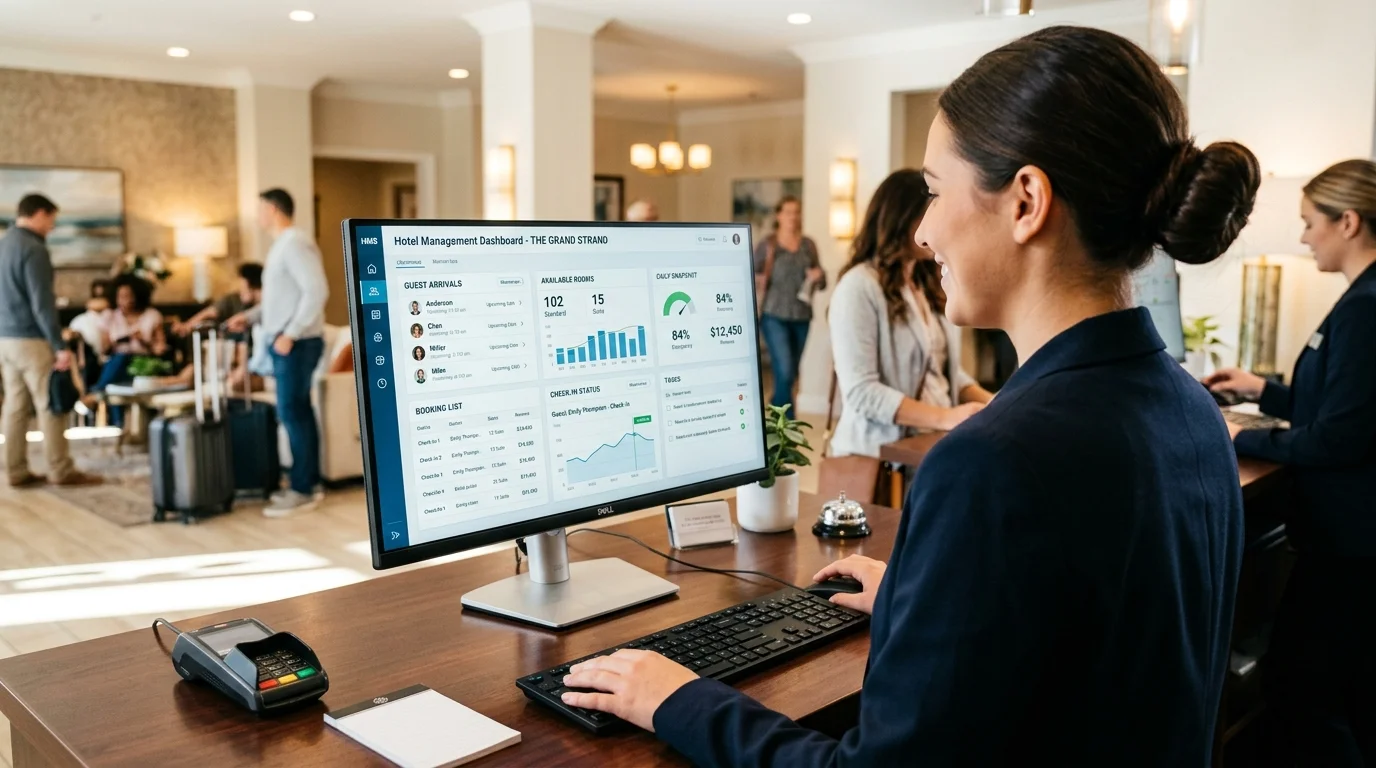
By utilizing AI and automated workflows to handle the transactional elements of check-in, hotel staff are freed from staring at computer screens. They can step out from behind the desk, greet guests warmly, and focus on delivering genuine, high-touch hospitality.

Ready to engineer a frictionless guest journey for your property? Contact our expert development team today to discuss implementing an enterprise-grade GMS.


A little clarity

Frequently asked questions

How much time does digital check-in save?

Digital check-in significantly reduces guest wait times by automating administrative tasks. By allowing guests to complete ID verification, payment, and room allocation pre-arrival, hotels can substantially decrease front desk queue times. This frees staff to focus on personalized service, enhancing the overall guest experience and operational efficiency.

How does digital check-in handle guest data privacy under GDPR for EU hotels?

Digital check-in systems must comply with GDPR by implementing robust data encryption, secure storage, and clear consent mechanisms for guest information. Personal data, including IDs and payment details, should be processed only for specified purposes, with strict access controls and data minimization practices to protect guest privacy in EU hotels.

What factors influence the timeline for implementing an automated check-in loop?

The timeline for implementing an automated check-in loop depends on integrating with existing PMS and smart lock systems, the complexity of custom features, and data migration needs. Factors like API availability, staff training, and thorough testing also influence the duration, typically ranging from a few weeks to several months for a comprehensive solution.

How do mobile keys enhance the guest experience?

Mobile keys allow guests to bypass the front desk entirely, proceeding directly to their room upon arrival. This convenience eliminates waiting, provides instant access, and offers a modern, seamless entry experience. It also reduces physical key management for hotels, contributing to operational efficiency and guest satisfaction.

Why should hotels prioritize direct bookings for automated check-in?

Prioritizing direct bookings allows hotels to capture guest data earlier, enabling a smoother pre-arrival digital check-in process. This direct relationship also avoids OTA commissions, maximizing revenue. A personalized, automated journey encourages loyalty and provides a superior, branded experience from the very first interaction, enhancing guest satisfaction.

Keep reading

More on Hospitality Technology

Running hospitality software?

See how we build for hotels.

Guest journeys, daily operations and the systems behind them. Start from the setup you have and the problem that costs you most.

See hospitality software

Let’s talk about your project.

Just your name and email to start. Add a brief if you have one.

Nikunj, our Sales Head, replies within one business day.

Prefer email? [email protected]