Search NSDBytes

Find the right place to start.

Popular starting points

Start typing or choose a suggestion.

Search across services, products, case studies and insights.Can’t find it? Tell us what you need

Set It and Forget It: Simplifying Dynamic Pricing and OTA Management

How automated dynamic pricing keeps hotel room rates in step across OTAs, what the rate sync does, and what to check before pricing by channel.

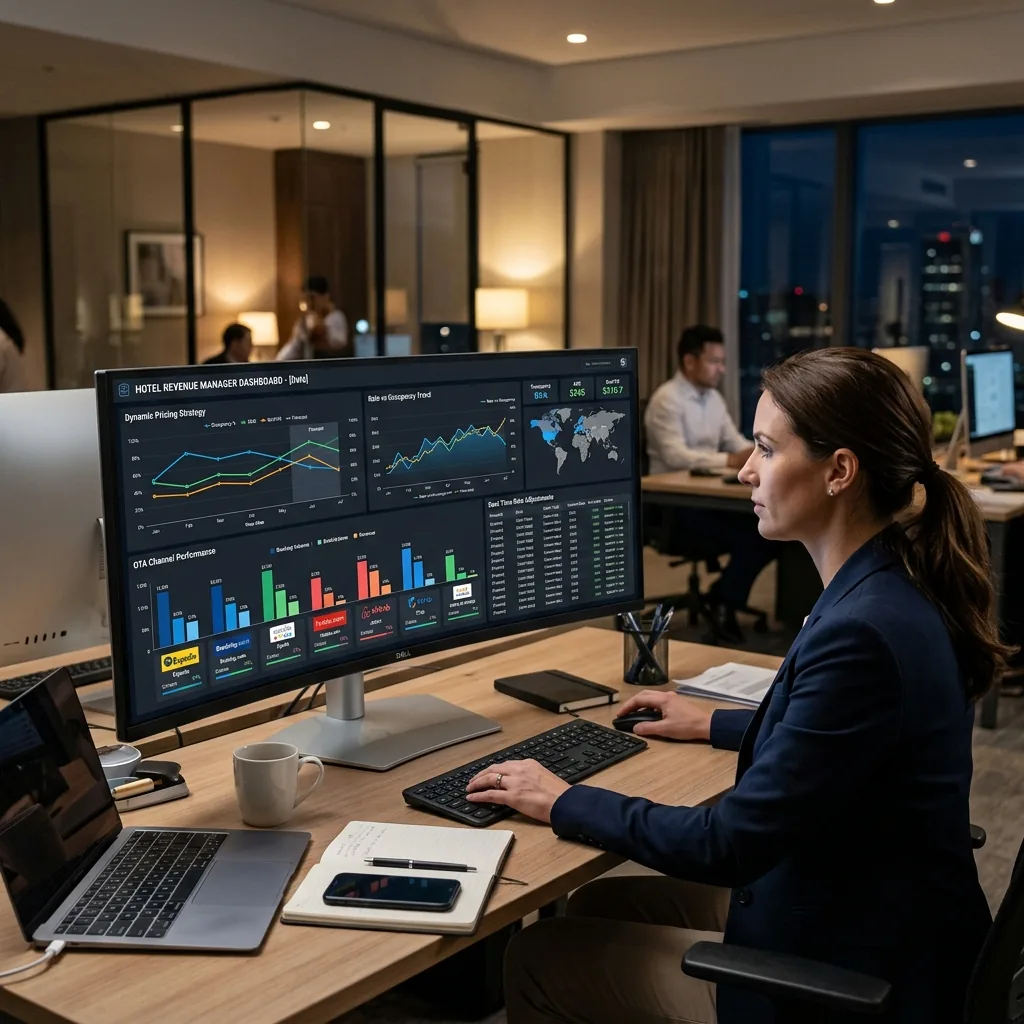
Dynamic Pricing Dashboard

Revenue management is one of the most complex and time-consuming tasks in the hospitality industry. For years, maximizing yield meant manually analyzing competitor rates, tracking local events, and adjusting prices across multiple Online Travel Agencies (OTAs) through cumbersome extranets. For independent hoteliers leveling the playing field, this manual approach is no longer viable.

The solution is automated, intelligent revenue management—the ability to “set it and forget it.”

The Challenge of Multi-Channel Management

When a hotel manages its inventory manually, discrepancies are inevitable. A sudden spike in demand might result in rooms being sold at a lower rate than the market can bear, simply because staff couldn’t update the OTAs fast enough. Conversely, during low demand, failing to adjust prices downwards can lead to empty rooms.

Furthermore, maintaining parity across various channels while trying to drive direct bookings is a constant juggling act. Whether a hotel may price differently by channel at all depends on its contracts with each booking channel and on local law, so check your agreements before setting any channel rules.

Demystifying Dynamic OTA Pricing & Sync

Modern hospitality software development has fundamentally changed how pricing is handled. By integrating a sophisticated revenue module into a central Guest Management System (GMS), hotels can deploy a real-time dynamic pricing engine that instantly updates rates across all OTAs.

This system monitors predefined rules, occupancy levels, and market signals to automatically adjust prices up or down. It eliminates manual data entry by instantly syncing OTA booking details directly into the property management system.

The Benefits of Automation

Implementing a dynamic pricing and sync engine provides several key advantages:

  1. Maximizing Yield Management: The algorithm ensures you are always selling rooms at the optimal price, capturing maximum revenue during high demand and stimulating bookings during low periods.
  2. Operational Efficiency: Revenue managers are freed from the drudgery of manual rate updates, allowing them to focus on high-level strategy and promotions.
  3. Local Market Domination: As part of a broader strategy to stop resellers from hijacking your brand, automated sync helps properties keep rates aligned across channels and, where their channel agreements allow it, use smart rules to incentivize direct bookings.
  4. Integration with Operations: Pricing automation ties directly into operational tools. For example, high occupancy driven by optimized pricing seamlessly feeds into occupancy-driven housekeeping plugins for efficient room turns.

By implementing these scalable architectures, NSDBytes empowers hotel operators to drastically reduce operational friction. Dynamic pricing is no longer a luxury reserved for massive chains; it is a fundamental tool for any property looking to thrive in the modern market.

Want to automate your revenue management? Get in touch with us to explore custom dynamic pricing integrations.


A little clarity

Frequently asked questions

What is dynamic OTA pricing for hotels?

Dynamic OTA pricing is an automated system that continuously adjusts hotel room rates across all Online Travel Agencies. It leverages real-time data like demand, occupancy, competitor rates, and market signals. This ensures optimal pricing at all times, maximizing revenue potential and adapting quickly to market fluctuations without manual intervention.

How does automated pricing help independent hotels?

Automated pricing empowers independent hotels by optimizing room rates continuously across all channels. It eliminates the need for a dedicated revenue manager to manually update prices, freeing up staff. This allows smaller properties to maximize yield, keep rates aligned across channels, and encourage direct bookings where their channel agreements allow, competing effectively with larger chains.

Do hotels using dynamic pricing in the EU need to think about consumer protection rules?

Yes. Rules on price transparency and consumer protection vary by country, inside the EU and outside it, and this article is not legal advice. A hotel using dynamic pricing should take local legal advice before going live, show guests the full price before they book, and be able to explain how its rates are set.

How long does it take to implement a dynamic pricing engine for a hotel?

Implementing a dynamic pricing engine typically takes several weeks to a few months. The timeline depends on the complexity of integrations with existing Property Management Systems (PMS) and Guest Management Systems (GMS), data migration, and the customization required for specific pricing rules. Initial setup involves data mapping and system configuration.

How does a dynamic pricing engine integrate with a hotel's existing systems?

A dynamic pricing engine integrates with a hotel's existing Property Management System (PMS) and Guest Management System (GMS) via APIs. This allows real-time data exchange for occupancy, bookings, and room inventory. The engine pushes updated rates to Online Travel Agencies (OTAs) and the hotel's direct booking engine, so each channel shows the rate the hotel has set for it.

How does dynamic pricing help hotels drive more direct bookings?

Whether a hotel may show a lower rate on its own website than on an OTA depends on its contracts with each booking channel and on local law, so check your agreements first. Where they allow it, a pricing engine can apply direct-only rates or packages automatically. Where they do not, it keeps rates aligned across channels.

Keep reading

More on Hospitality Technology

Running hospitality software?

See how we build for hotels.

Guest journeys, daily operations and the systems behind them. Start from the setup you have and the problem that costs you most.

See hospitality software

Let’s talk about your project.

Just your name and email to start. Add a brief if you have one.

Nikunj, our Sales Head, replies within one business day.

Prefer email? [email protected]